Describe a B2B service request without promising a response time
“This is urgent to us” is useful context, but not an assigned service priority.
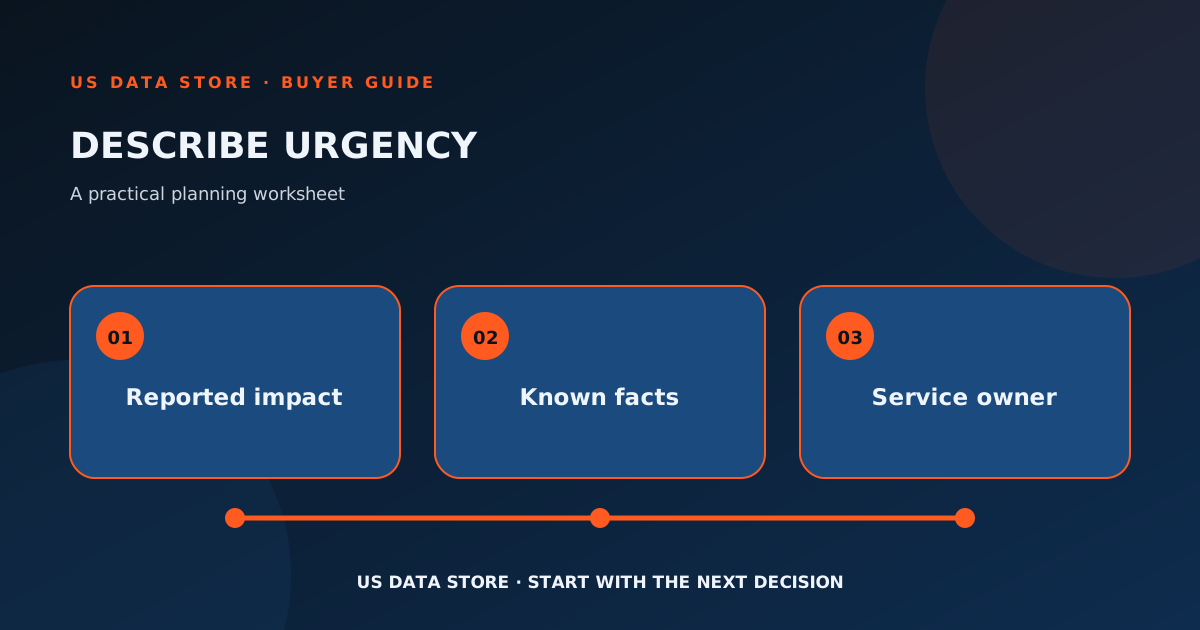
When a B2B caller says a request is urgent, record what they report and what is known. Let the authorized service team decide the priority and response commitment under its own policy. A useful first-call note can be specific without claiming a ticket has been opened or help will arrive by a particular time.
Ask about impact in the caller's words
“How is this affecting your work?” invites concrete context. The caller may describe a stopped process, a recurring error, or a question with a deadline. Repeat the description accurately. Do not replace it with your own severity label unless the team has approved that classification rule and the facts support it.
| Caller-reported impact | Fact checked during the call | Unknown to leave open | Receiving owner |
|---|---|---|---|
| Anonymized words from the caller | Only what your team actually verified | Cause, priority, or response time | Your actual service role |
Illustrative: “Our warehouse cannot print labels” is a report of impact. It does not prove a system outage, a contractual priority, or a restoration time. A receiving team can use the detail without treating it as a diagnosis.
Make the next step honest
State what you can say now: the request was received if that is true, what details were captured, and who reviews it next under the business's process. If the next owner or timing is unknown, do not invent one. The service handoff guide shows how to preserve context; the support/account boundary guide helps separate an account question from a service issue.
Bring a few anonymized requests to the team that assigns priorities. Ask whether the note lets them decide the next action without overpromising to the caller. To discuss a practical B2B inbound path, contact US Data Store.