How to route a B2B service call with context
A routing decision is more useful when it carries the caller's reason, the intake details, and a clear next owner.
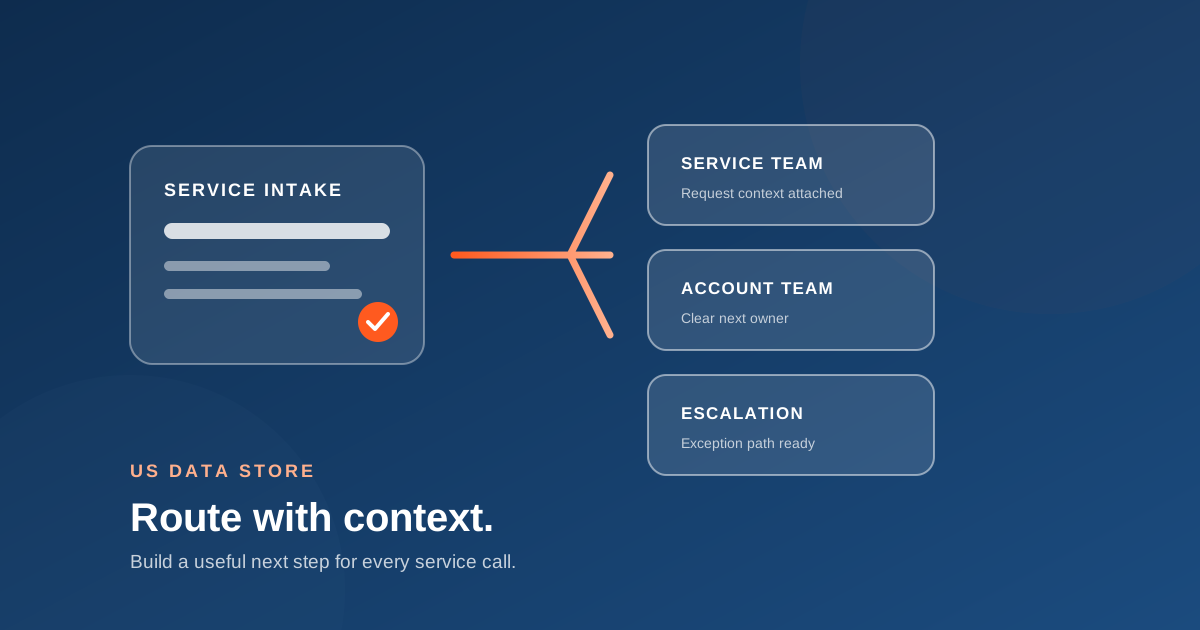
A B2B service call often begins with a broad request: a question about an account, a service issue, a status check, or a need to reach a particular team. The first answer does not have to solve every case. It does need to establish enough context for the next step to make sense.
Start with the reason for the call
Good routing is an operating decision, not just a menu of destinations. Begin by defining the few signals that change where a caller should go: the kind of request, the product or service involved, the existing relationship, and whether the issue needs a specialist. Those signals give an inbound flow a useful job to do before a handoff.
- Identify the request in the caller’s own words
- Capture the details the receiving team needs to begin
- Use clear routing rules for common service paths
- Set aside complex or unusual cases for escalation
Design the handoff around context
A route without context can create a second first conversation. A useful handoff carries a short record of why the caller reached out, the details already collected, and the next team or owner. That gives the receiving person a starting point while keeping the caller’s experience more coherent.
The purpose of intake is not to collect everything. It is to collect the information that makes the next decision easier.
Make exceptions visible
Not every call will match a standard service path. Define what should happen when the request is unclear, urgent, sensitive, or outside the normal categories. An explicit exception path helps the team decide when a human conversation should take over rather than forcing every situation into the same route.
US Data Store is built for B2B teams shaping a more deliberate inbound operation. See how the service-call flow works, review the frequently asked questions, or talk through your routing needs.