When a B2B service request needs more than a transfer
A transfer can connect a caller to a team. A service-request path gives that team the reason, context, and next decision it needs to begin.
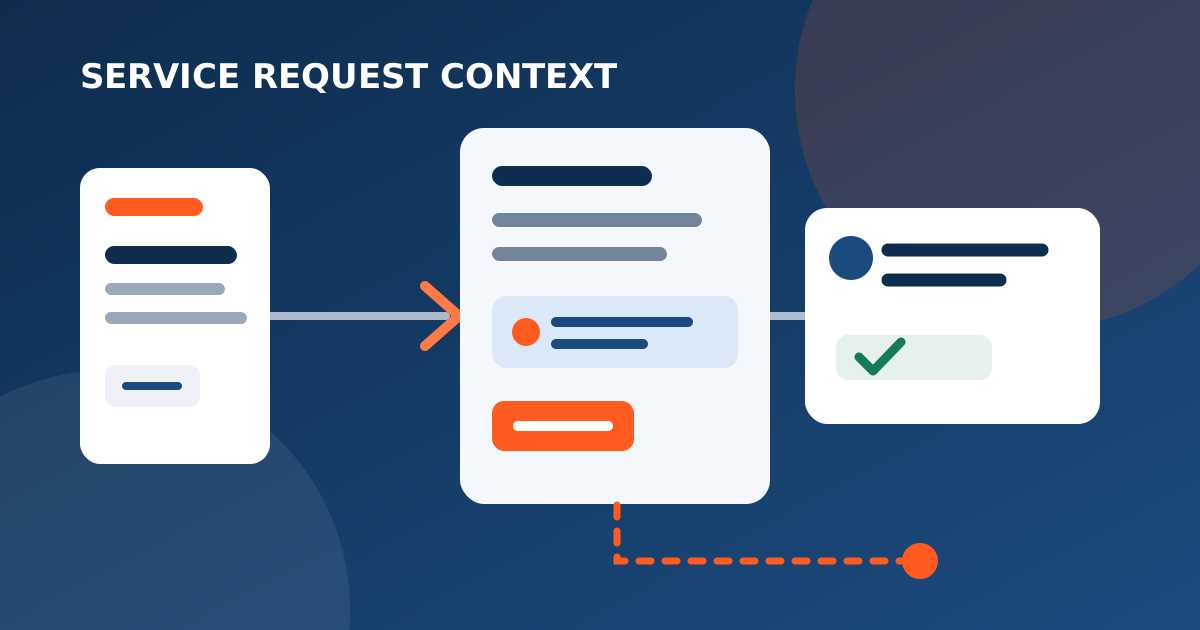
For a simple request, a transfer may be enough. For a B2B service conversation with history, several details, or an unclear destination, a transfer alone can leave the next team to reconstruct the call. The useful question is not whether a caller can be connected. It is whether the receiving owner has enough context to decide what happens next.
A transfer moves a call; a request path preserves the reason
Before defining where a caller should go, decide what the business needs the next owner to understand. The details should reflect the service operation, but the aim is consistent: preserve the caller’s reason and the information that changes the next action.
- Record why the caller contacted the business
- Capture the service or relationship context the next team needs
- Identify the normal owner for that category of request
- Make it clear when the request needs another decision or escalation
Set the boundary for a standard route
Not every request needs the same path. A routine service topic may have a clear team or approved answer path, while a complex request may need a person to choose the owner. Defining that boundary keeps the intake focused: the first conversation can gather the agreed context without pretending to resolve the service decision.
The right handoff is not just a destination. It is a reason and a next action the receiving team can use.
Keep an exception path in view
Some calls will not fit the normal categories. Give those requests a visible route for human judgment and include the context already gathered. The business retains responsibility for service decisions; a deliberate request path simply makes the first transition easier to understand.
US Data Store helps B2B teams shape support intake and handoffs around their own operations. See How It Works, review the FAQ, or talk through your service-request path.